

👋 Hi, I’m Mike. This is the companion newsletter for my podcast (Spotify, Apple, YouTube).
In my last post, I argued not to chase customers because founders often waste years before realizing that their startup won’t get customers. You need an earlier signal so instead you should search for People in Pain. Insight: anyone who’s ever been a customer first began as a Person in Pain™.
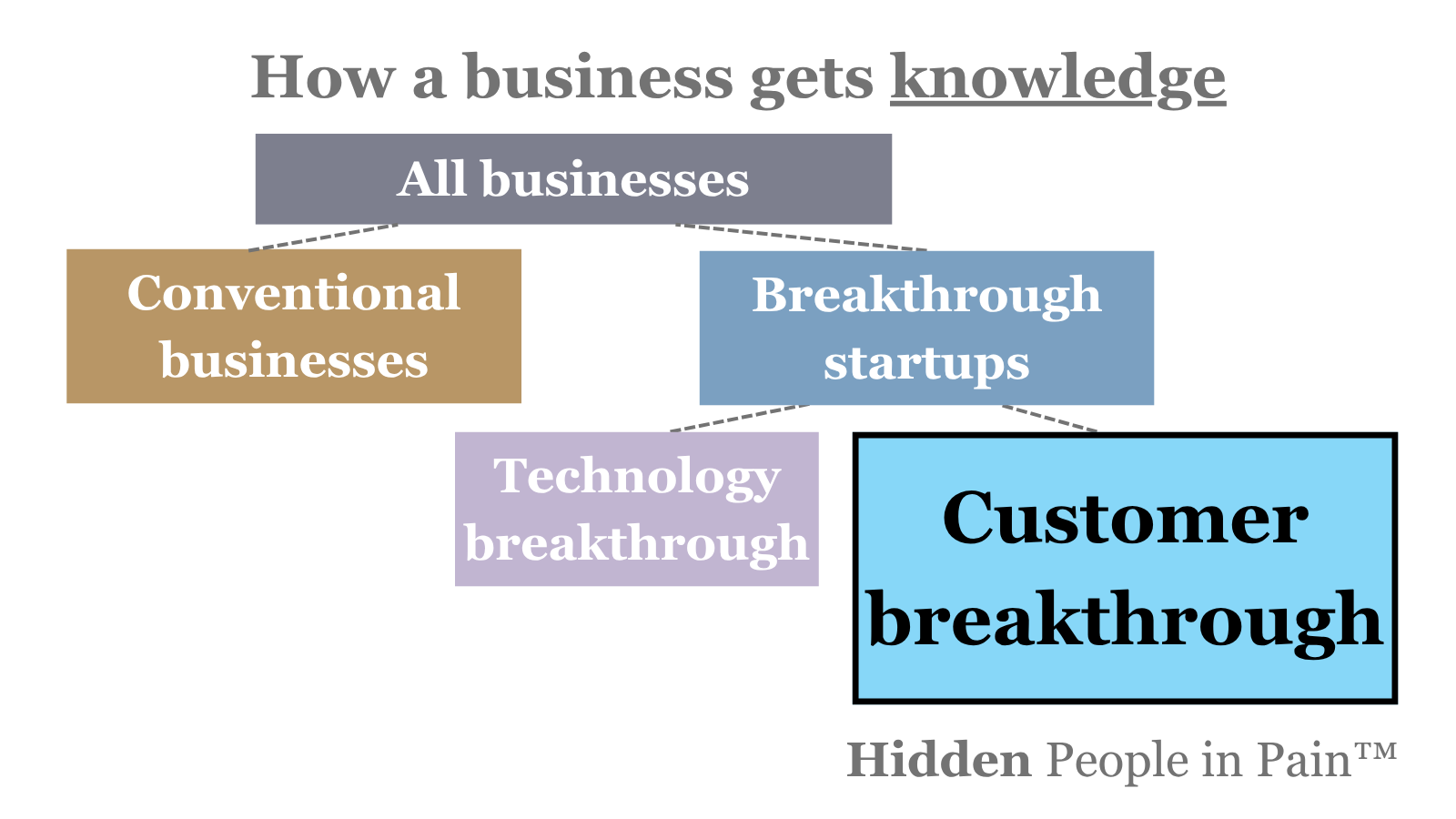
Nascent is a strategy with the perspective that knowledge is what defines a business. Nascent categorizes businesses based on how they acquire their knowledge:
Conventional businesses (e.g., pizza shop, car mechanic) - founders learn most of the knowledge because it already exists
Breakthrough startups - founders create the knowledge because it doesn’t yet exist.
Technology breakthrough - a new solution to a valuable, obvious problem (e.g., Ozempic, teleportation)
Customer breakthrough - a new solution to a valuable, hidden problem (e.g., Airbnb, Uber)
Let’s talk through a few examples.
🍕 A pizza shop is a conventional business. To run a pizzeria, most of the knowledge exists already, such as making pizza and serving customers. Founders can learn this knowledge from books and by working at other pizzerias.
💊 Ozempic is a technology-breakthrough startup. The problem of weight loss was obviously valuable. Founders just needed to create the knowledge for the solution: a miracle drug that delivered weight loss and then they knew they’d have customers.
🏡 Airbnb is a customer-breakthrough startup. The problem of strangers staying at each other’s homes was not obviously valuable. It was hidden. Airbnb’s founders had to create the knowledge about both the problem and the solution. It was not obvious that solving the problem would result in paying customers.
What about you? Is your startup similar to a conventional business, like a pizza shop? A technology-breakthrough, like Ozempic? Or a customer-breakthrough startup, like Airbnb?
I expect that you’re pursuing a customer-breakthrough startup. You’re trying to create a new solution to a valuable, hidden problem — the opportunity is compelling to you, but most other founders don’t see it.
If you jump into building your product and your business, you’re likely to waste months or years. Instead be strategic. Your best first step is to use Nascent to find People in Pain with the hidden problem and quantify their Pain in dollars. Since your startup is a knowledge-creation project, begin by measuring the value of that knowledge using first-hand data from the People in Pain who could become your customers. To do this, you must overcome the challenge that People in Pain are invisible.
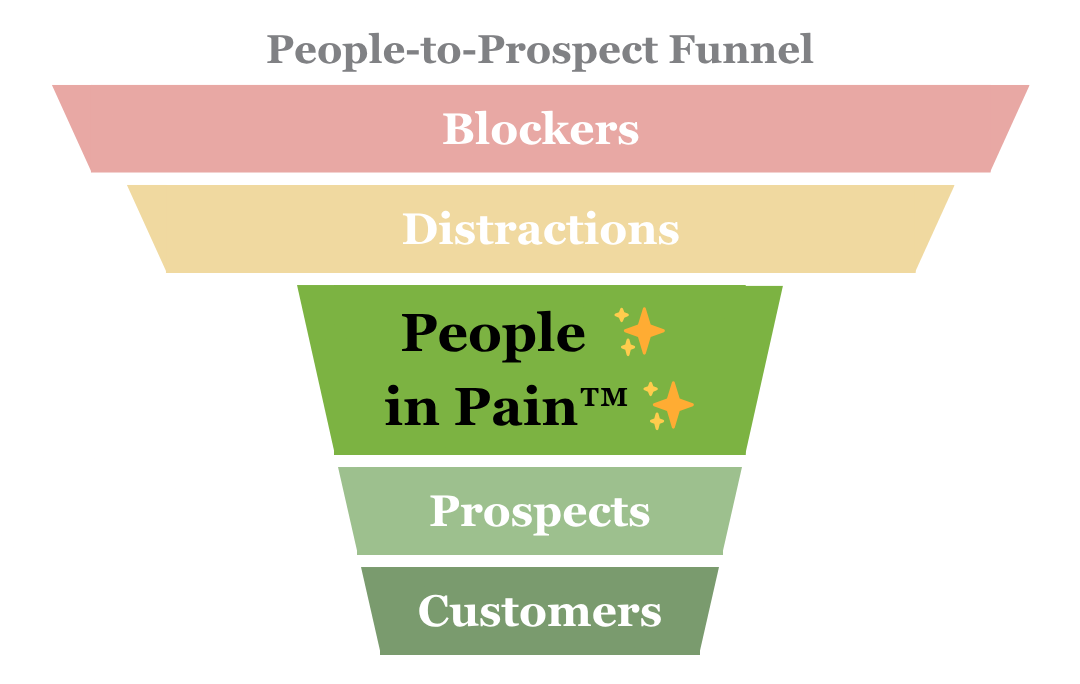
To clarify the distinction between hidden People in Pain and visible customers, Nascent has a framework called the People-to-Prospect Funnel™ to let you map the journey for your potential customers:
Blockers: There are 8 billion people and your startup is irrelevant to most of them
Distractions: People interested in your startup who will never become customers
People in Pain: Invisible people with the potential to become customers
Prospects: Visible people who want what your startup provides
Customers: Visible people who’ve paid money to your startup
To see the People-to-Prospect Funnel in action, picture a food cart pod filled with chefs eager to serve customers.
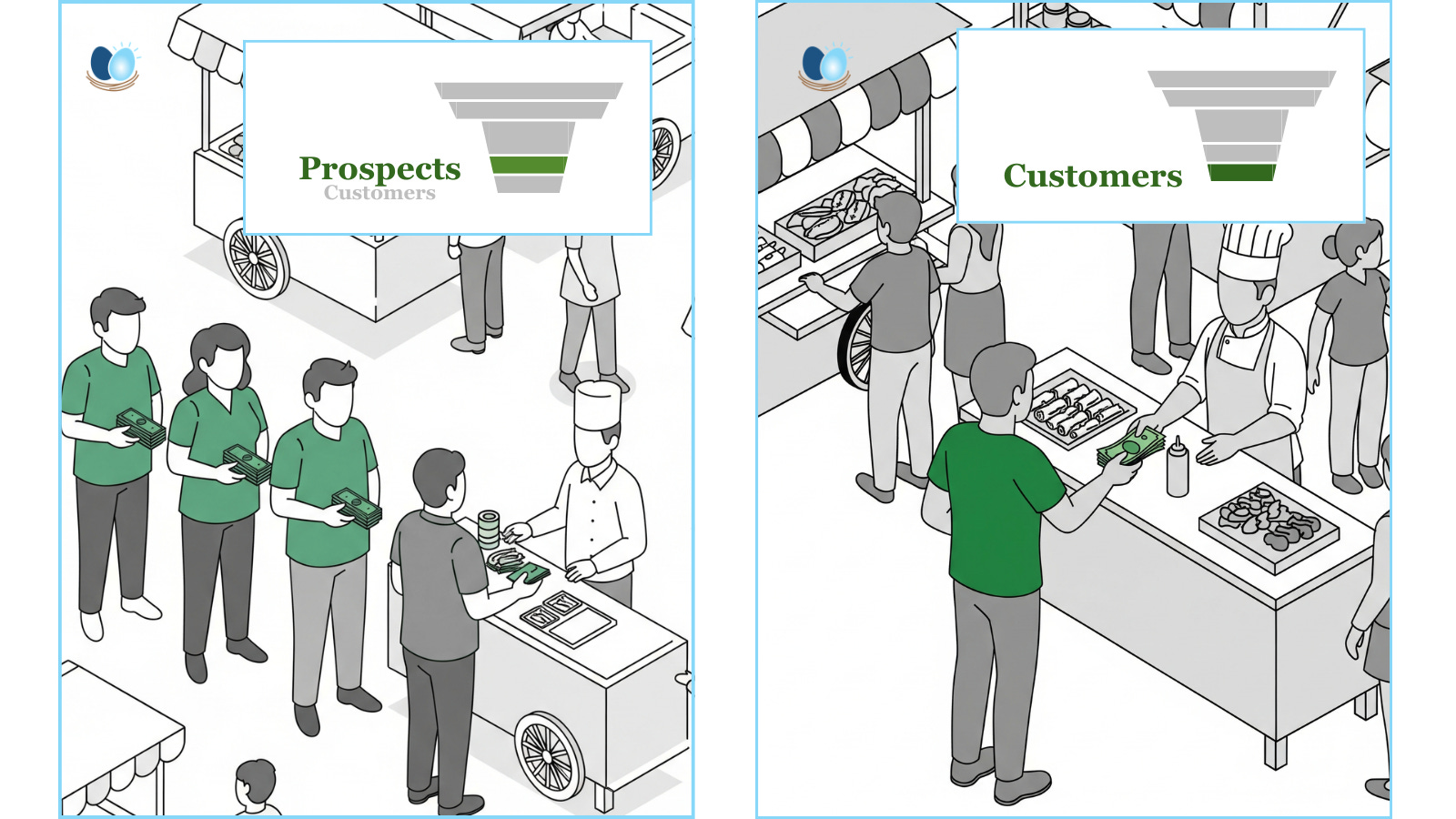
At the more popular food carts, you can see a line of prospects waiting, cash-in-hand, ready to pay the chef. You can see a customer paying money to the chef. Here’s what you cannot see: the invisible People in Pain nearby. There are hungry people walking by who don’t realize that the chef is right there and wants to serve them.
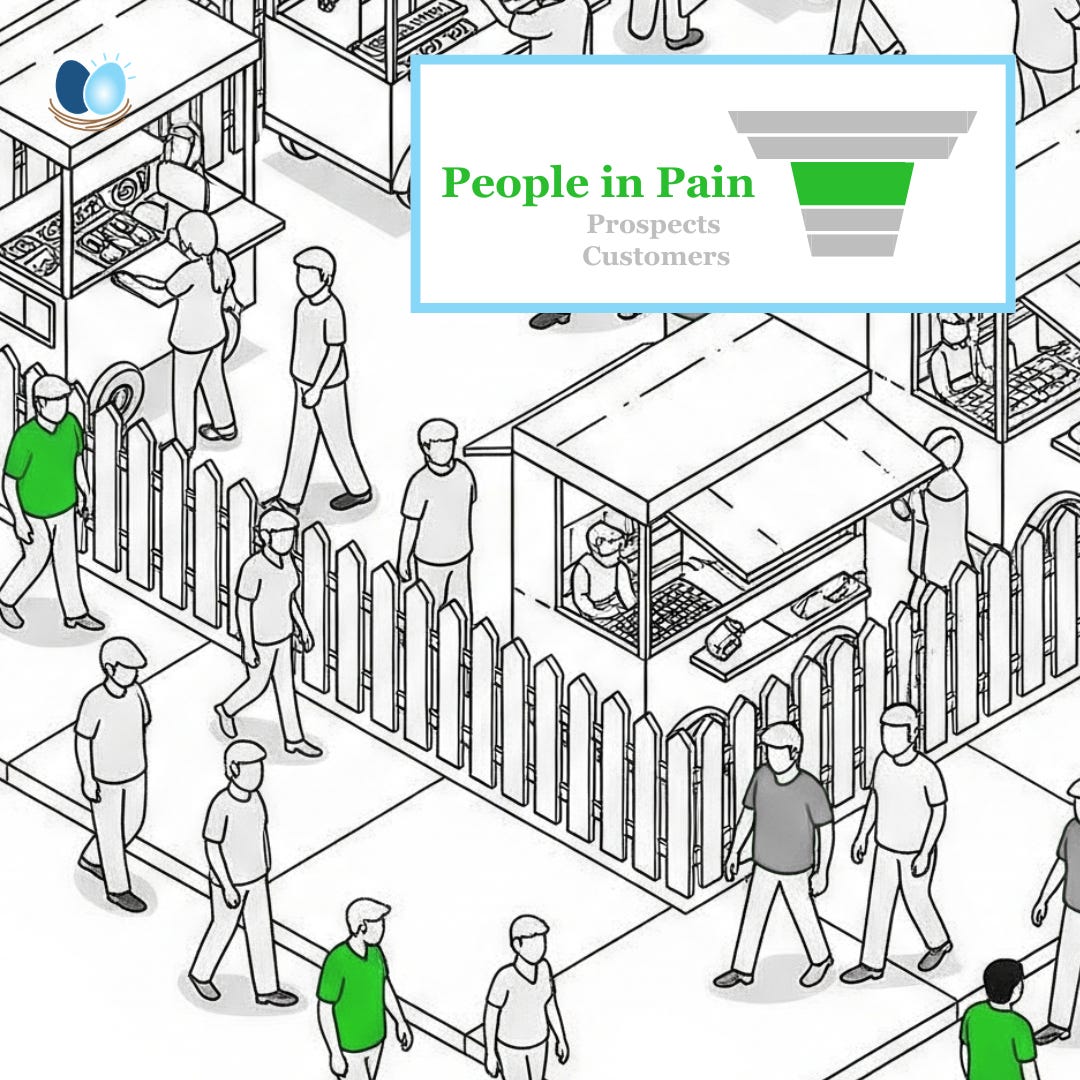
As a founder of a startup with no customers, of course, you ultimately want customers. But if your first step is chasing customers then you’ll likely waste years. Instead, get an earlier signal. Before anyone ever becomes your customer, they’re first going to be a prospect, and before that a Person in Pain. In other words, for your startup to have a chance of ever getting a customer, first you must find People in Pain with an expensive, excruciating problem.
Over the coming posts, we’ll get into how to search for those People in Pain and how to quantify their Pain in dollars so you can quickly get a signal whether your startup might ever get a customer.
As of 2026, I’m publishing Nascent methodology, a few ideas at a time, in regular podcast episodes. This is the companion newsletter that summarizes the podcast. For a deeper dive, check out the podcast on Spotify / Apple Podcasts / YouTube.