

👋 Hi, I’m Mike. This is the companion newsletter for my podcast (Spotify, Apple, YouTube).
Reid Hoffman was WRONG when he said:

“Willingness to jump” is not even Reid Hoffman’s most valuable asset! His most valuable asset is his ability to know whether the plane might fly. Only then is willingness to jump valuable, not disastrous. The only thing that matters for a founder of a startup with no customers is whether the plane might fly, whether there’s a possibility of success for their startup. Hoffman’s intuition lets him take this for granted; the rest of us need a toolkit that approximates his intuition.
In entrepreneurship, we focus on startups with huge exits, where the founders jumped off a cliff and their plane flew. But if you add up all the startups with exits over $10M, they still make up less than 1% of all startups. The other 99% of founders shut down their startups with nothing, splat. I call this a “zero-dollar exit.”
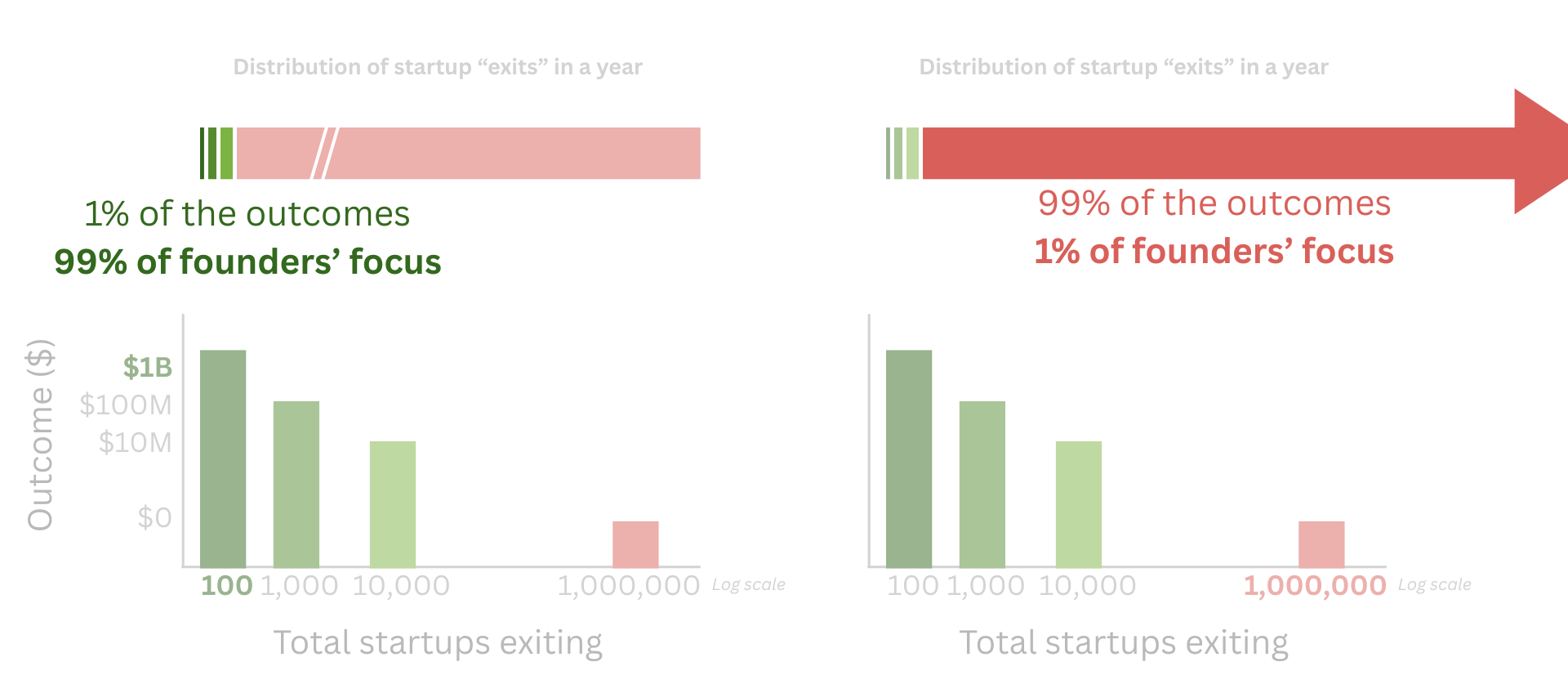
I want to be clear: a 99% failure rate for startups is fine. It’s great that lots of founders pursue ideas, even if most startup ideas fail. We cannot control the RATE of failure. I’m a contrarian because I don’t accept the DURATION of the projects. Founders often waste a year on a bad startup idea. My goal with Nascent is to reduce time wasted down to days. It’s unfortunate when a startup fails, when the plane won’t fly — but we can’t control that. We can control how we allocate our time. Founders need a way to predict whether a project has a chance of success.
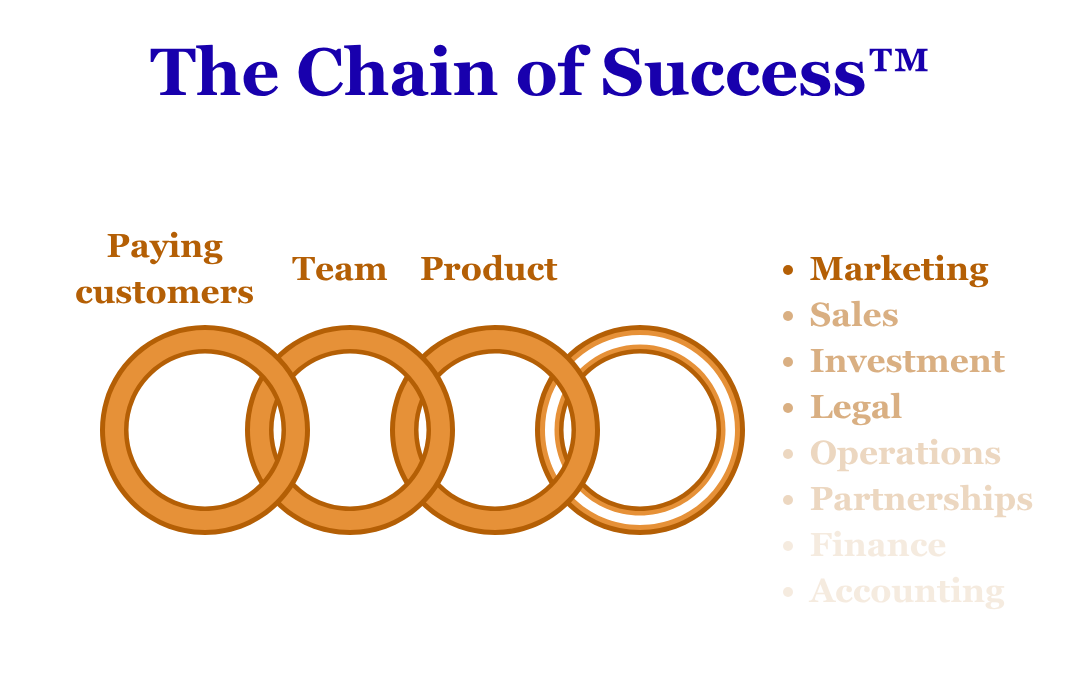
The Chain of Success™ is a framework that articulates everything that needs to go right for a startup to succeed: paying customers, team, product, marketing, sales, legal. Each of these is a link in the Chain of Success. For those top 1% of successful startups with big exits, all of the links held in their Chain of Success. For the startups with zero-dollar exits, at least one link failed, so the whole Chain failed.
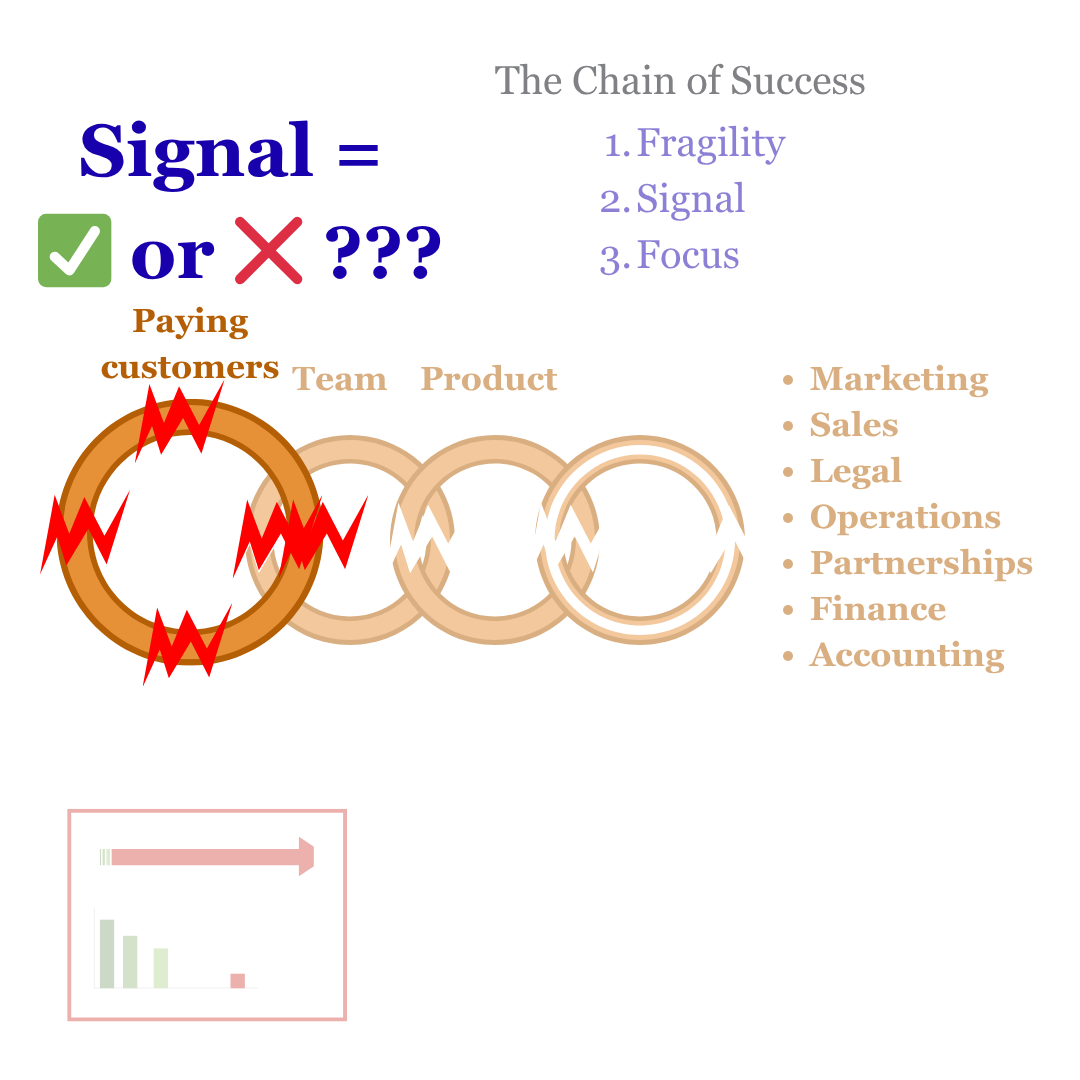
The Chain of Success reveals three strategic takeaways:
1. Fragility. It’s really easy for the Chain to break, for the startup to fail, and your work to come to nothing.
2. Signal. Therefore don’t invest heavily in creating a link — don’t build a product, recruit a team or write a marketing plan. Instead, get an early signal whether the Chain might hold.
3. Focus. Only prioritize the link most likely to break. Until you have reason to believe that link *might hold* none of the other links matter.
The data is clear and consistent over the last 20 years (CB Insights, Why Startups Fail): the biggest risk to a startup is whether it can get paying customers. That’s the riskiest link. Until you have a signal that paying customers might be possible, any work you put into any other aspect of your startup is a waste.
As of 2026, I’m publishing Nascent a few ideas at a time in regular podcast episodes. This is the companion newsletter that summarizes the podcast. For a deeper dive, check out the podcast on Spotify / Apple Podcasts / YouTube.