

👋 Hi, I’m Mike and I’m obsessed with startups with no customers. This newsletter 031.1 📬 is a deep dive into why products imply hidden Pain, as discussed in Episode 031 of the Nascent podcast 🎧 (Spotify, Apple, YouTube).
The perspective of Nascent is that the essence of business is transforming a Person in Pain™ into a paying customer. This is true for businesses that make products that you’re already familiar with and for the products you hope to create with your startup. Understanding this concept enables founders to distinguish between people who will never become customers and others who just might.
Products are Pain-relief devices.
For instance, you might see someone hiking in the woods and think to yourself, “yeah, they look fine”. You’re probably correct — but they were not always fine. Before the journey, the hiker was scared of getting lost in the woods and worried about the burden of lugging gear by hand. These negative emotions drove the hiker’s actions: they bought a compass and a backpack to get Pain relief. The compass relieved their fear of getting lost. The backpack relieved their burden of carrying equipment. Those products are Pain-relief devices, which is why, in the end, the hiker feels fine.
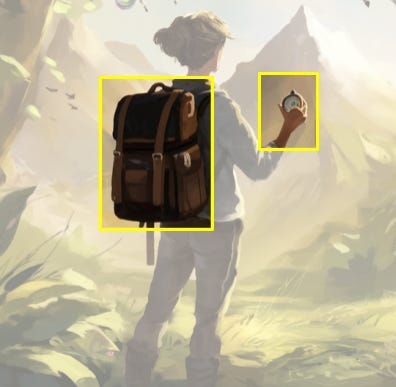
How can we tell that they went from feeling scared and worried to being ok? The compass and backpack are visible clues. But we’re not mind readers. So, most importantly, we have a conversation and they tell us in their own words how they felt before the hike and then after buying products.
Their journey of using products had a beginning, middle and end. At first, the hiker was a Person in Pain who was hurting. Then they bought products to get Pain relief. The compass. The backpack. Whatever else they needed for the hike. And that’s why now they’re doing fine.
As entrepreneurs, we want to deeply understand this transformation. What matters is that the Person in Pain paid for the product to take them along that journey. Without that initial condition of hurting, the Person in Pain does not buy a product.
Without an initial condition of hurting, a Person in Pain does not buy a product.
Our challenge is that it’s easy to envision money and products, but it’s difficult to articulate the hidden Pain that those products imply. As you navigate the world, I encourage you to try to say aloud the Pain implied by the products around you. Right now you’re probably somewhere with a door nearby. 🚪 You could look at the door and say it implies a fear of revealing sensitive information, of not wanting to be overheard. You might also say that the door implies a worry about disturbing others with loud noises.
I’d love for you to try to develop this skill of articulating the relationship between products and Pain. Look at two or three objects in your life and try to articulate the Pain that they imply. After you’ve done that for some existing products, repeat it with your startup idea. What are the fundamental Pains that you want your startup to solve? Let me know what you find. I’d love to hear about it.
Mike supports founders of pivoting startups who want to avoid wasting another year on a bad idea. Book a call with me at NascentIdea.com.
For the past 10 years, I’ve been building Nascent as the strategy for quantifying product discovery. As of 2026, I’m publishing Nascent, a few ideas at a time, in regular newsletter posts and podcast episodes. This is Post 031.1 📬, a deep dive into the concept of hidden pain discussed in Ep031 🎧 (15 mins). The deep dives continue in 031.2: money is a metric for pain and 031.3: other people’s pain is your opportunity.