

👋 Hi, I’m Mike and I’m obsessed with product discovery, measured in dollars. This newsletter is a deep dive into drive reduction theory, as discussed in Episode 032 of the Nascent podcast (Spotify, Apple, YouTube).
Only one thing matters for founders of startups with no customers: determining how their startup could get its first customers. Previously, we talked about how behavioral economics predicts who might become a customer. Now let’s leverage the field of psychology, specifically how drive reduction theory indicates who might take action and pay for a product.
The key is that feelings drive actions. Specifically, drive reduction theory explains that people with negative feelings, like hunger or thirst, experience a drive to take action and reduce their discomfort. This is why we eat food and drink water. Humans seek Pain relief.
The example of a thirsty person drinking is called a primary drive because it’s innate and reactive. It’s an immediate response to a really uncomfortable, visceral feeling.
But human beings aren’t purely reactive — we also think ahead. We tell ourselves stories about scenarios in the future, which generate emotions and also drive us to act. These secondary drives are acquired and predictive.

For example, yesterday you might’ve felt thirsty so you looked for water. That was a primary drive. Now today you have a secondary drive: anxiety. You’re projecting out a story that you might be thirsty again, and that fear of discomfort is what makes you carry a water bottle around with you all day.
What’s interesting about secondary drives is that they’re not only based on personal, direct experiences. We don’t just worry about repeating our own painful ordeals. Secondary drives can also come from indirect experiences — other people’s stories. If somebody tells us about an awful incident, that can also cause us negative feelings that drive our actions.
Founders want to look for specific primary and secondary drives
You are a founder searching for People in Pain™ who might become your startup’s first customers, so you want to look for specific primary and secondary drives. When you run discovery interviews and ask people about their previous experiences, you’re hoping to hear stories where their primary drives were activated. Where something awful happened to them.
Even better, you’re hoping that they now have a secondary drive that comes out of their first-hand direct experience. You’re hoping to find people who feel really anxious or worried or fearful about something awful happening to them again. These People map to hurting on the Yardstick of Pain. The more hurting People you find, the bigger your opportunity to create a business.
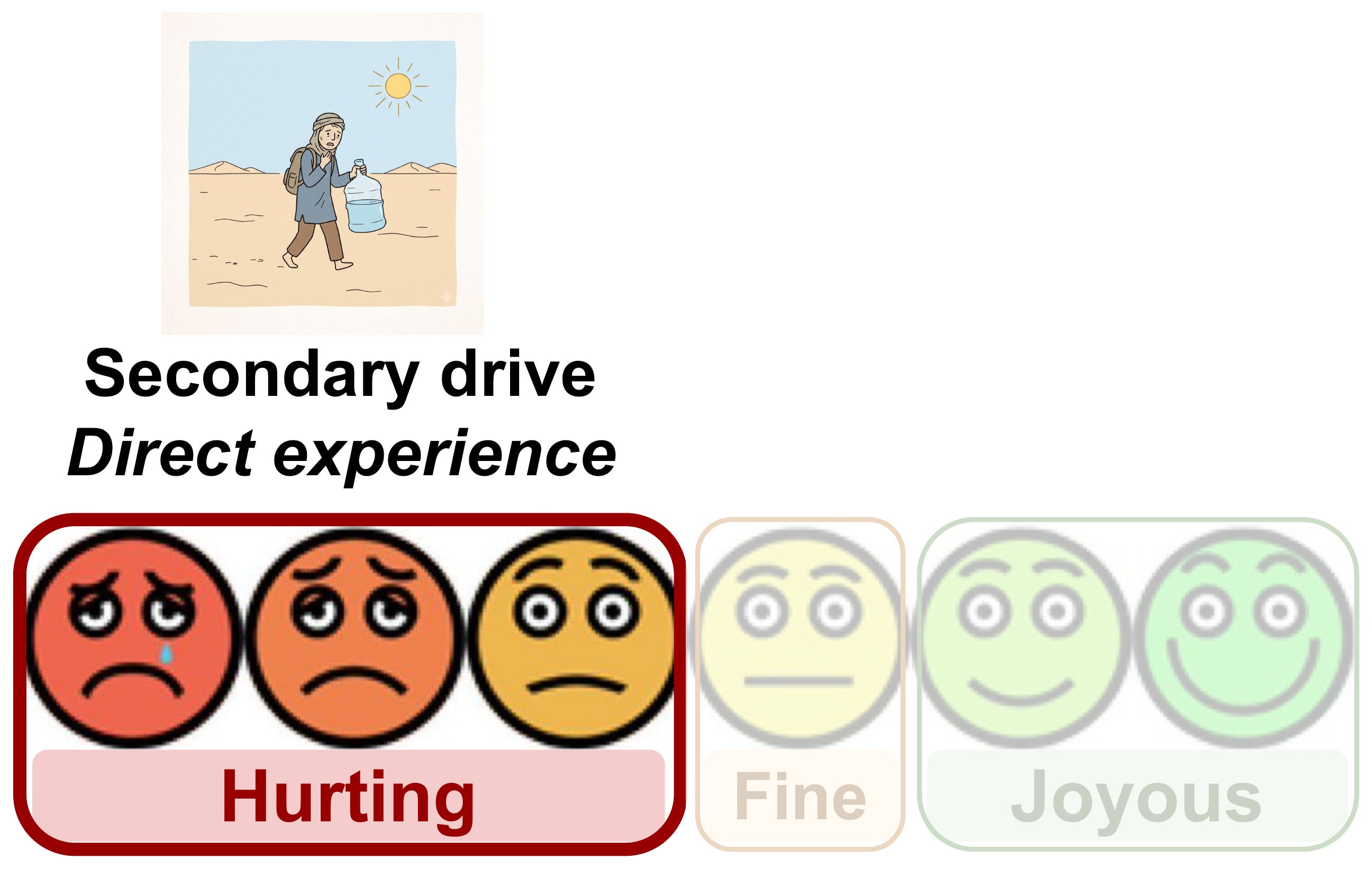
For example, if you’re a founder of a water bottle startup, you would love to find somebody who was dying of thirst yesterday and now is in a frantic panic to avoid that discomfort. That’s the kind of Person in Pain who might become a customer.
Understanding secondary drives also helps us understand what to avoid. Yes, we can try to tell stories and induce an indirect secondary drive in other people, but that is too much work. We don’t want to be storytellers trying to manufacture a secondary drive. Technically this is possible, but unlikely to lead to success. An awful go-to-market (GTM) strategy is to take people who are fine and try to convince them that they should be hurting. Instead, founders want to serve People who are already hurting, People with a secondary drive based on their direct experience with the problem you hope to solve. If you can find lots of these people, that’s your best indication that your startup might someday get customers.
Mike supports founders of pivoting startups who want to avoid wasting another year on a bad idea. I offer personalized workshops that train your team to reliably analyze discovery interviews. Book a call with me at NascentIdea.com.
For the past 10 years, I’ve been building Nascent as the strategy for quantifying product discovery. As of 2026, I’m publishing Nascent, a few ideas at a time, in regular newsletter posts and podcast episodes. This is Post 032.2 📬, a deep dive into drive reduction theory discussed in Ep032 🎧 (18 mins). The deep dives continue in 032.1: why people who feel fine won’t buy and 032.3: converting interviews into dollars.