

👋 Hi, I’m Mike and I’m obsessed with product discovery, measured in dollars. This newsletter is a deep dive into the Evaluate → Split → Repeat cycle, as discussed in Episode 035 of the Nascent podcast (Spotify, Apple, YouTube).
We can’t control whether we find our startup’s first customers, but we can control how much time we spend on the search.
This is the third post in a 4-part series explaining how founders can use Nascent’s Quantified Pain Graph™ to be more decisive and effective with their limited time. The graph shows a founder where their startup stands after one round of interviews. The cycle of Evaluate → Split → Repeat tells them what to do next, so they can focus their efforts in the next round. This graph is for the case study on BundleShop, the startup to relieve the Pain of moms shopping for their kids:
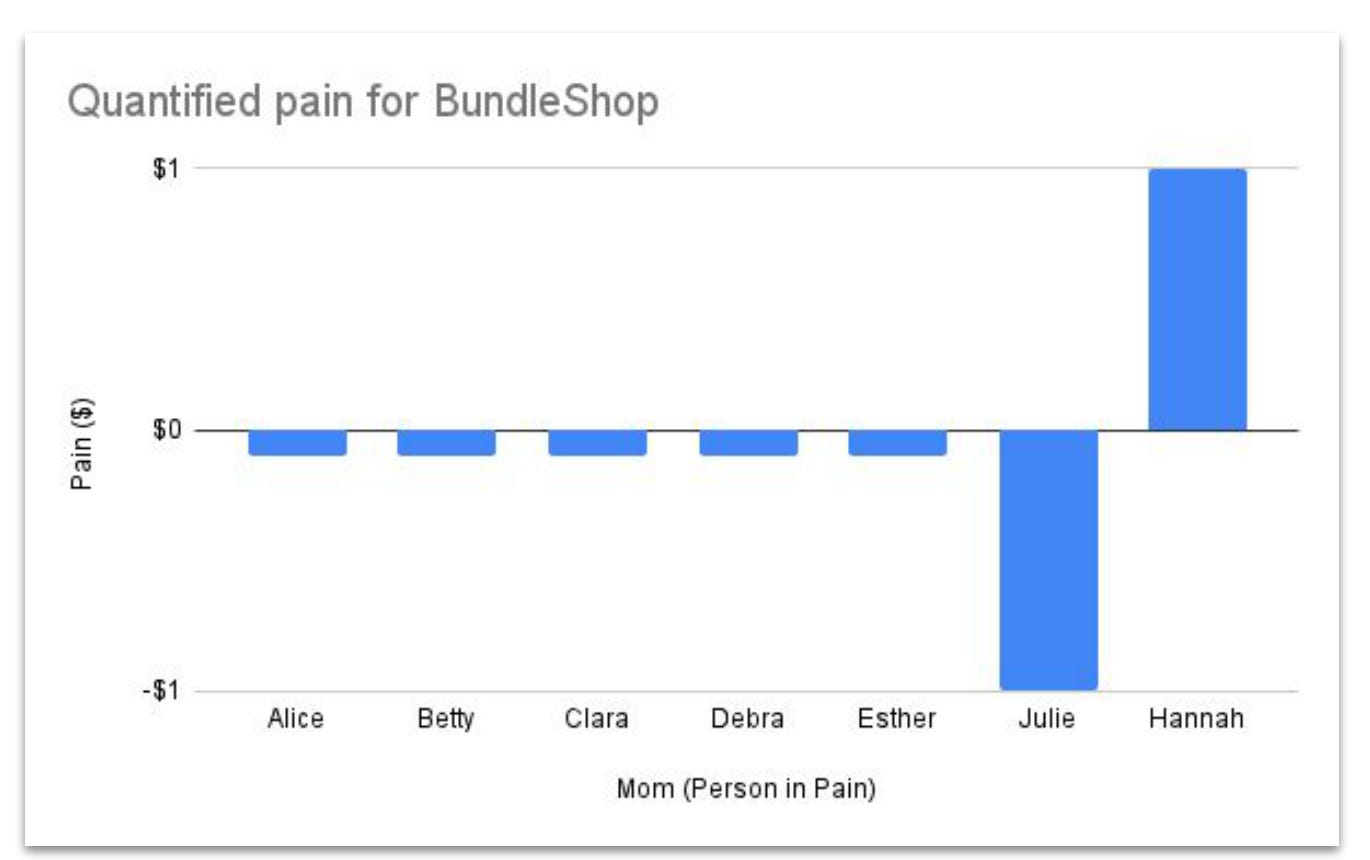
Evaluate. The evaluate step is when the founder explicitly uses the graph to answer the question: “Is this idea for a startup worth pursuing?” The founder then chooses to either kill or continue the project. The highest priority here is that the founder decides quickly, not whether they “validate their startup idea”.
Speed over outcome
BundleShop’s founder made that quick decision, but I’m not going to share it because I want to emphasize speed over outcome. Let’s assume they chose to continue so you can see Nascent’s approach to iterative improvement. In that case, the founder moves on to the Split step.
Split. This step begins with a diagnostic of the interview data in the graph. The Quantified Pain Graph has two rules: everyone on the x-axis must be similar People. And all the Pain on the y-axis must be similar Pain, quantified in dollars ($).
We can apply these rules to the graph for BundleShop. Is all the Pain on the y-axis similar? Yes. All the interviewees talked about how they felt about shopping for their kids.
And are all the People on the x-axis similar? No. In her interview, Hannah the mom said, “Nobody told me about rain boots, and I didn’t grow up in New England.” Hannah is an immigrant, whereas all the other moms grew up in the US — they’re domestic.
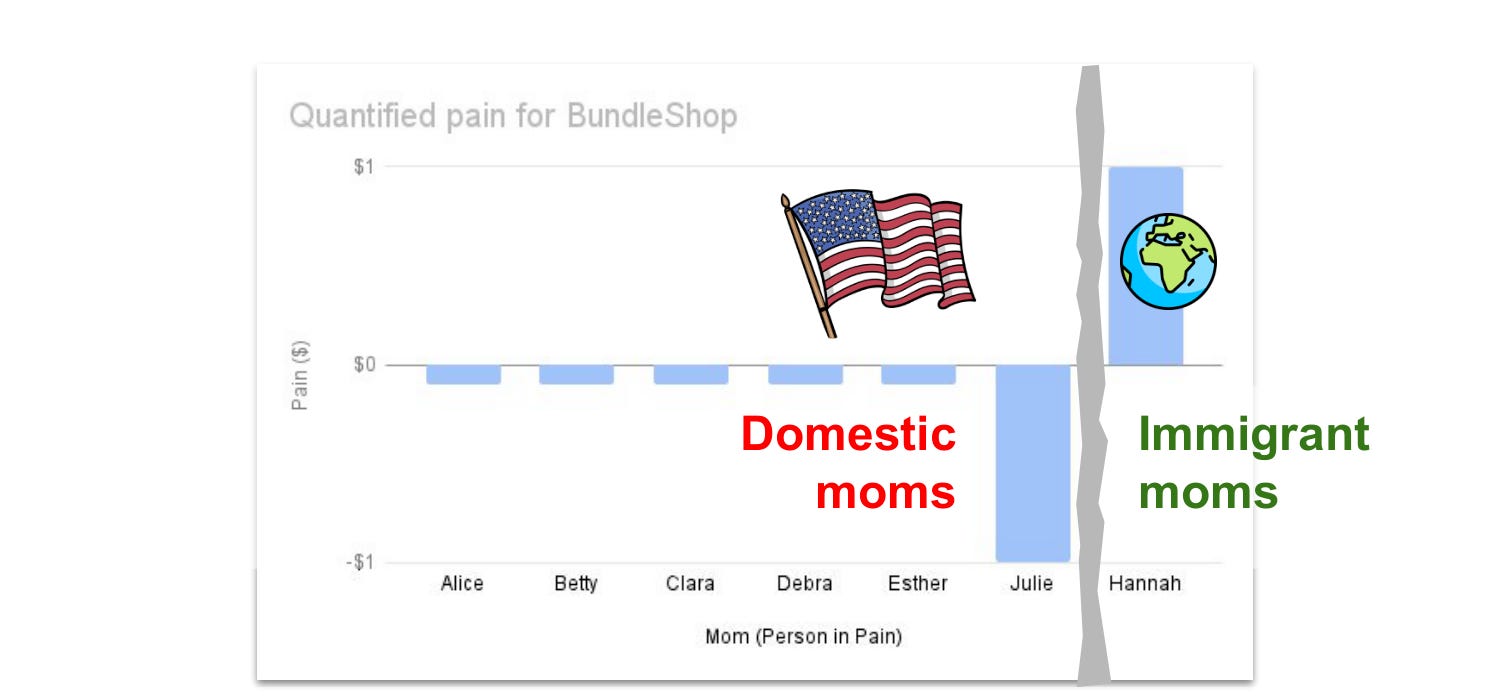
In this split step, the founder takes the original Quantified Pain Graph and divides it into subgraphs. In the case study this was one subgraph for domestic moms and another subgraph for immigrant moms.
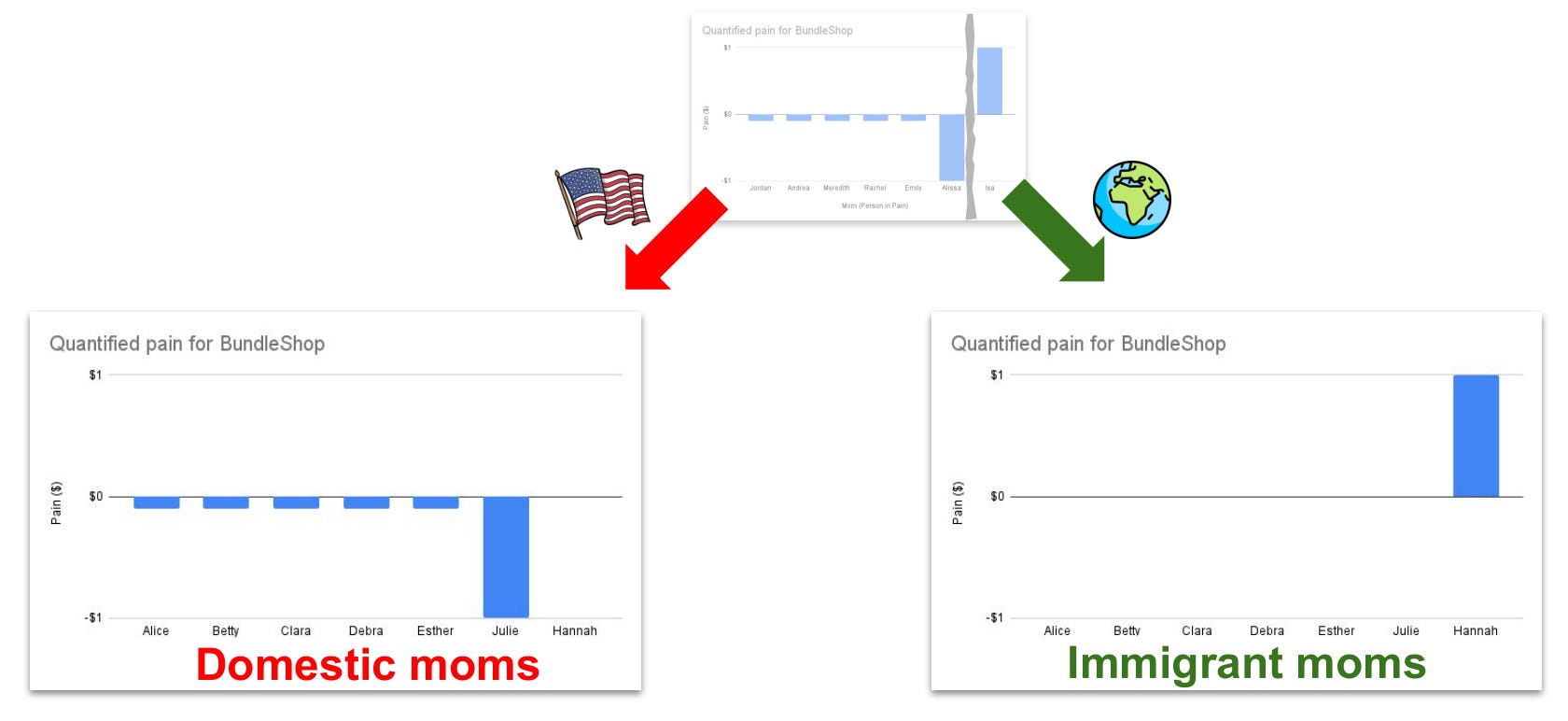
Repeat. Now the founder repeats the Evaluation for each subgraph individually and asks again, “Is this idea for a startup worth pursuing?”
The subgraph for domestic moms only shows zero and negative dollars of Pain. This group of domestic moms doesn’t struggle to shop for their kids, so BundleShop cannot provide them relief. We can’t say for sure who will become BundleShop’s first customers, but these domestic moms are very unlikely.
By contrast, the graph of immigrant moms shows promise. There’s at least $1 of Pain that BundleShop could relieve.
This is the payoff of the split: these subgraphs help the founder focus. In the first round of interviews, the founder’s screening question was, “Are you a mom?” For the next round of interviews, she asks, “Are you an immigrant mom?”
The impact of Nascent and the Quantified Pain Graph
When I taught Nascent workshops last year, I asked the 200 participants the same question at the beginning and end: Is BundleShop a startup idea worth pursuing? I wanted to see how Nascent affected their ability to decide. At the beginning of the workshop, they said that to decide they’d need market research, a competitive analysis, a Minimum Viable Product and customer interviews. Even when I provided initial versions of all of that, the participants still couldn’t decide quickly.
However, when they used the Quantified Pain Graph at the end of the workshop, almost all of the participants were decisive. To be clear, they made different calls. Some participants wanted to kill the startup. Some wanted more interviews. And some wanted to focus on finding more moms like Hannah. There were no wrong answers — what mattered most was that they got there quickly. The Evaluate step drove decisiveness and saved founders time.
Mike supports founders of pivoting startups who want to avoid wasting another year on a bad idea. Book a call with me at NascentIdea.com.
For the past 10 years, I’ve been building Nascent as the strategy for quantifying product discovery. As of 2026, I’m publishing Nascent, a few ideas at a time, in regular newsletter posts and podcast episodes. Here’s everything from Episode 035 🎧:
Episode summary: No, don’t count customer discovery interviews.
Deep dive: Let’s kill the count of customer discovery interviews
This deep dive: Cycles of iterative improvement drive decisiveness
Deep dive: What does “good” look like for a startup with no customers?