👋 Hi, I’m Mike and I’m obsessed with product discovery, measured in dollars. This newsletter is a deep dive into why founders should stop counting interviews, as discussed in Episode 035 of the Nascent podcast (Spotify, Apple, YouTube).
Let’s kill the count of interviews as a key metric in startups. To do that, entrepreneurs need a dramatically better tool — one that shifts the focus from actions to outcomes.
For the past fifteen years, the gold standard of entrepreneurship has been lean startup and customer development. Founders write down hypotheses about their business model, Get Out of the Building and run interviews against those hypotheses. That work drives two types of analysis: validating hypotheses and counting interviews. I take issue with both, but for now let’s just focus on The Count.
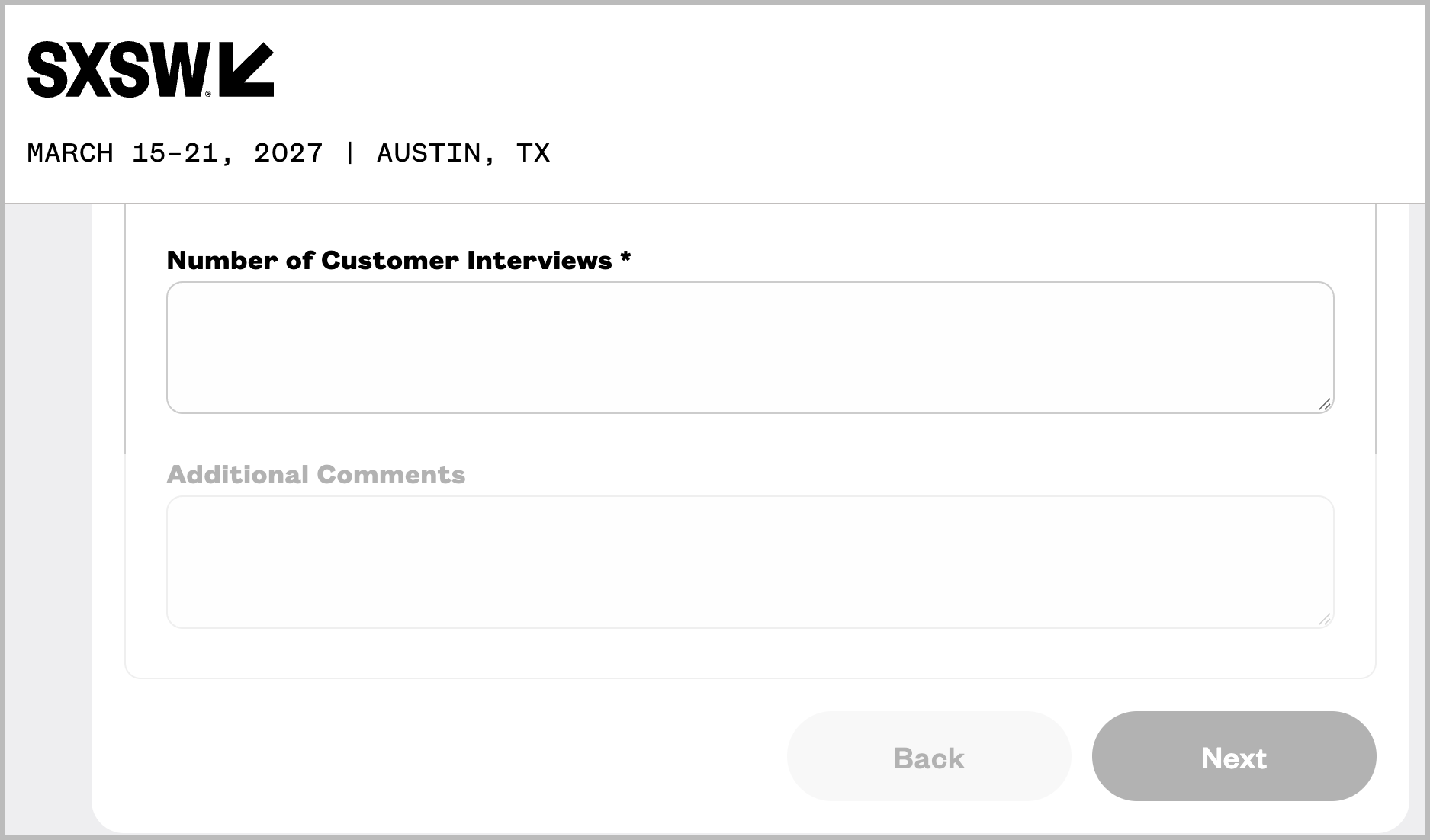
The count shows up everywhere. The NSF’s I-Corps program tells founders to run “100 customer interviews.” Stanford’s Lean LaunchPad class sets a target of 10 to 15 interviews a week. And “Number of Customer Interviews” is a required field in the application to pitch at the SXSW tech conference1.
I agree that the best first step for a founder with a startup idea is to gather and analyze data. The analysis needs to be quick to evaluate, which a count provides. But it also needs to capture outcomes. A count can’t do this because an interview is an input, the founder’s action. A count doesn’t distinguish between interviews that revealed lots of People with valuable Pain (a great outcome!) and interviews that generated no useful information (a typical outcome). Counting interviews causes founders to trick themselves into spending time on startups unlikely to get customers.
So what would be a better measurement tool? The Quantified Pain Graph™ displays the outcomes of a batch of interviews, so a founder can interpret them at a glance.
In Episode 035, we created this graph for “BundleShop”, the previous case study. For that startup, the founder interviewed seven moms about their struggles to shop for their kids; then we collaborated on the analysis.
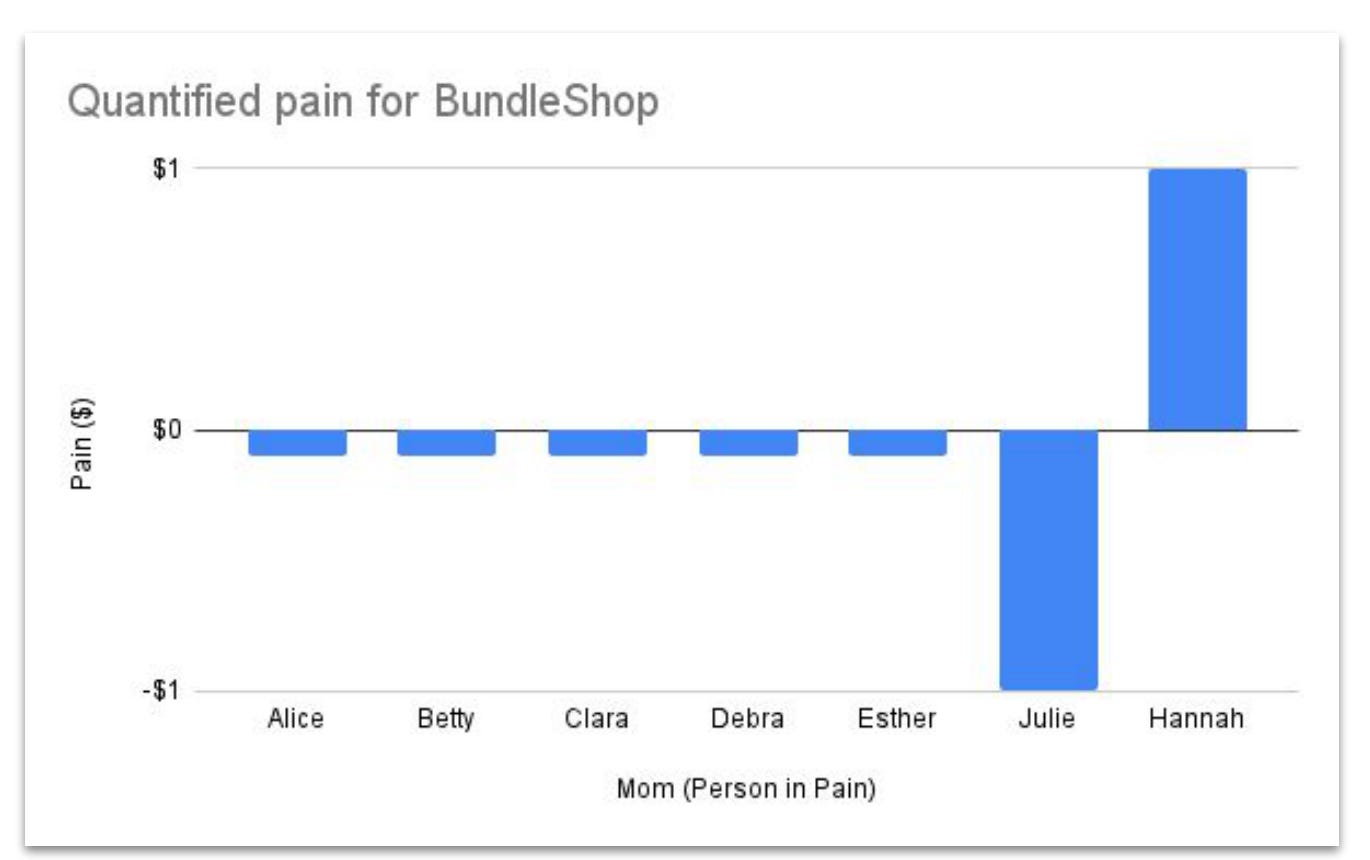
Each bar reflects an interviewee’s dollars of Pain using our conversion from emotions to dollars. The graph directly displays the key outcome: one interviewee has $1 of Pain — the first sign of a potential customer — against six other interviewees with $0 of Pain or less.
One of my favorite things about this graph is that it accounts for zeros. Every bar sitting at zero ($0 of Pain) is an interviewee who will never be one of the startup’s first customers. Today, founders discard these interviews. I think that’s a missed opportunity, because they provide a useful counter-signal that speeds up a founder’s decision making.
So far, the Quantified Pain Graph is the only tool I’ve found that shows the outcome of customer discovery interviews at a glance. If you’ve seen anything else, please let me know. I’ve been looking.
Mike supports founders of pivoting startups who want to avoid wasting another year on a bad idea. Book a call with me at NascentIdea.com.
For the past 10 years, I’ve been building Nascent as the strategy for quantifying product discovery. As of 2026, I’m publishing Nascent, a few ideas at a time, in regular newsletter posts and podcast episodes. Here’s everything from Episode 035 🎧:
Episode summary: No, don’t count customer discovery interviews.
This deep dive: Let’s kill the count of customer discovery interviews
Deep dive: Cycles of iterative improvement drive decisiveness
Deep dive: What does “good” look like for a startup with no customers?
Screenshot from SXSW application (https://cart.sxsw.com/products/acceleratorapp)