

👋 Hi, I’m Mike and I’m obsessed with product discovery, measured in dollars. This newsletter is a deep dive into what “good” looks like for a startup with no customers, as discussed in Episode 035 of the Nascent podcast (Spotify, Apple, YouTube).
When a startup has customers, everyone knows what good looks like: “up and to the right” — graphs of revenue and customer growth taking off like a rocket ship. But up-and-to-the-right growth is the wrong initial goal for a startup with no customers. Founders who aim for it will definitely spend lots of time trying and might never get there. They need an earlier signal before pursuing that more ambitious goal.
Nascent provides a simpler initial goal: the startup just needs positive dollars of Pain in a Quantified Pain Graph™. 📊 More important than a single graph is the trend. Ideally, the founder wants to see increasing dollars of Pain with each batch of interviews. This indication of iterative improvement is the signal that it might be worthwhile for the founder to invest lots of time pursuing up-and-to-the-right growth.
Why? Because pain relief is what motivates a Person in Pain to buy a product and become a customer. Positive dollars of Pain are the earliest sign that someone could become one of the startup’s first customers.
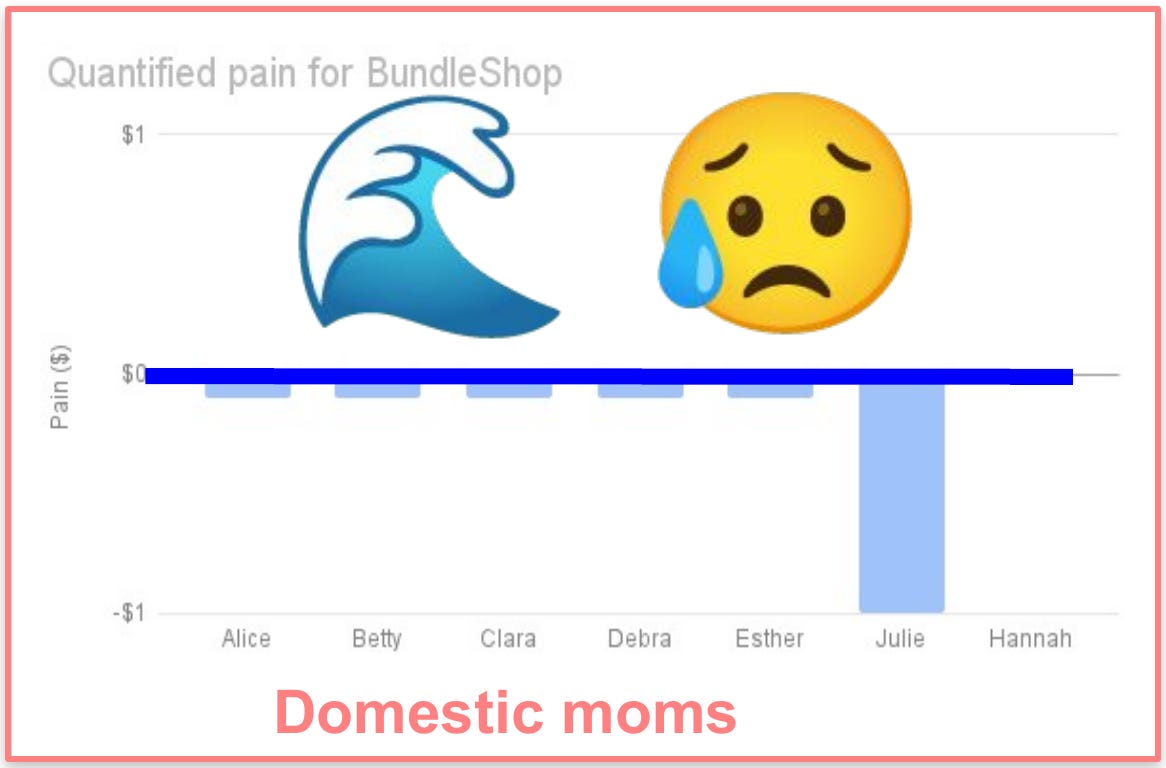
Here’s what this looks like for the BundleShop case study. The x-axis on the Quantified Pain Graph sits at $0 of Pain, which you can think of as a waterline. When the bars of Pain sit at $0 or below, like the graph of domestic moms in the BundleShop case study, the startup is drowning.
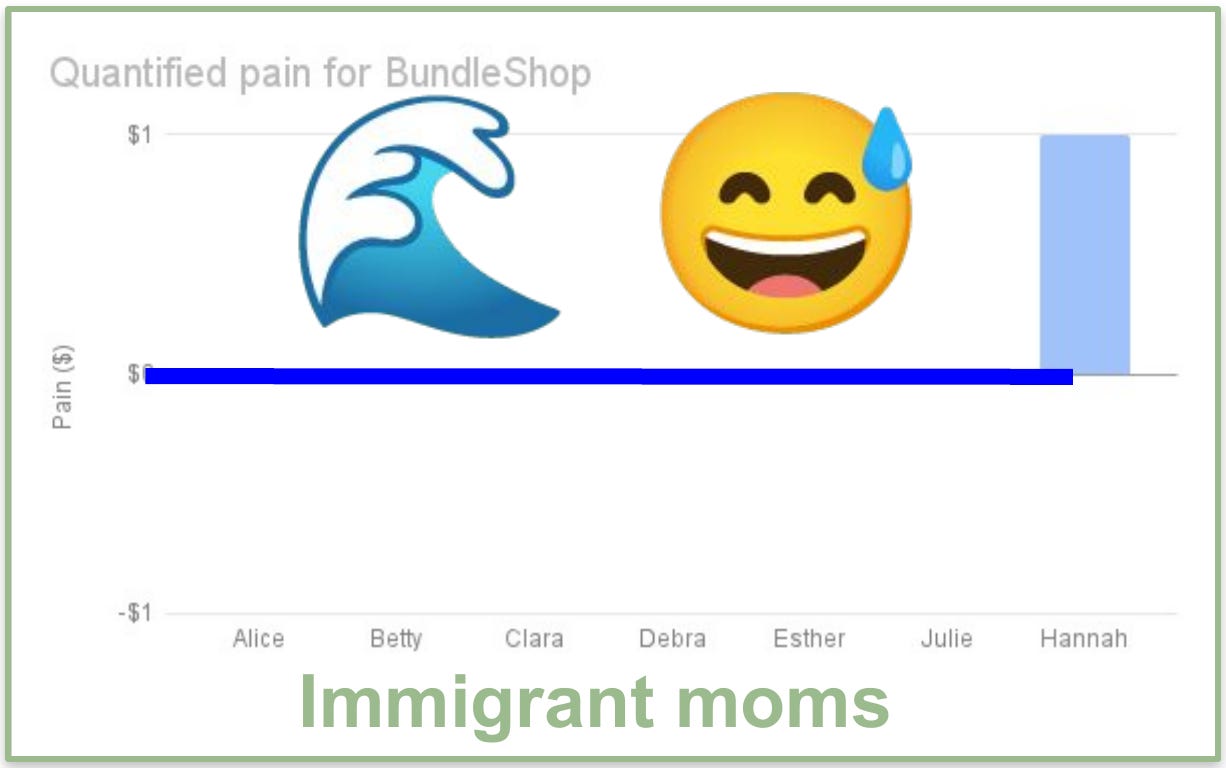
Good is when the bars rise above the waterline at the x-axis. We can see signs of head-above-water for BundleShop’s immigrant moms.
Ultimately, founders want to find consistent People in Pain™: interview after interview with the same type of person, each one Hurting. The Quantified Pain Graph would reflect that visually: bar after bar with roughly the same dollars of Pain for the same type of person. A founder will know that they understand the People in Pain they want to serve when they’re able to predict the next bar.
So how many cycles of Evaluate → Split → Repeat does a founder need? It depends (1) on the results of the interviews and (2) on the founder’s dedication to the problem. A founder with a personal connection to a problem, like a disease that runs in their family, will probably choose to run more cycles than someone without a connection. The key is that one disappointing round of interviews does not mean the project is a dead end. The founder can keep going and try to get better results in the next round. I encourage founders to look for improvements round over round.
You can think about it like building an airplane and getting it to fly. The first version of your airplane might only get up to 2 MPH, meaning the plane won’t fly yet. What matters is how the plane performs after a round of improvements. Does it go from 2 MPH to 3 MPH to 4 MPH? Or from 2 MPH to 20 MPH to 200 MPH?
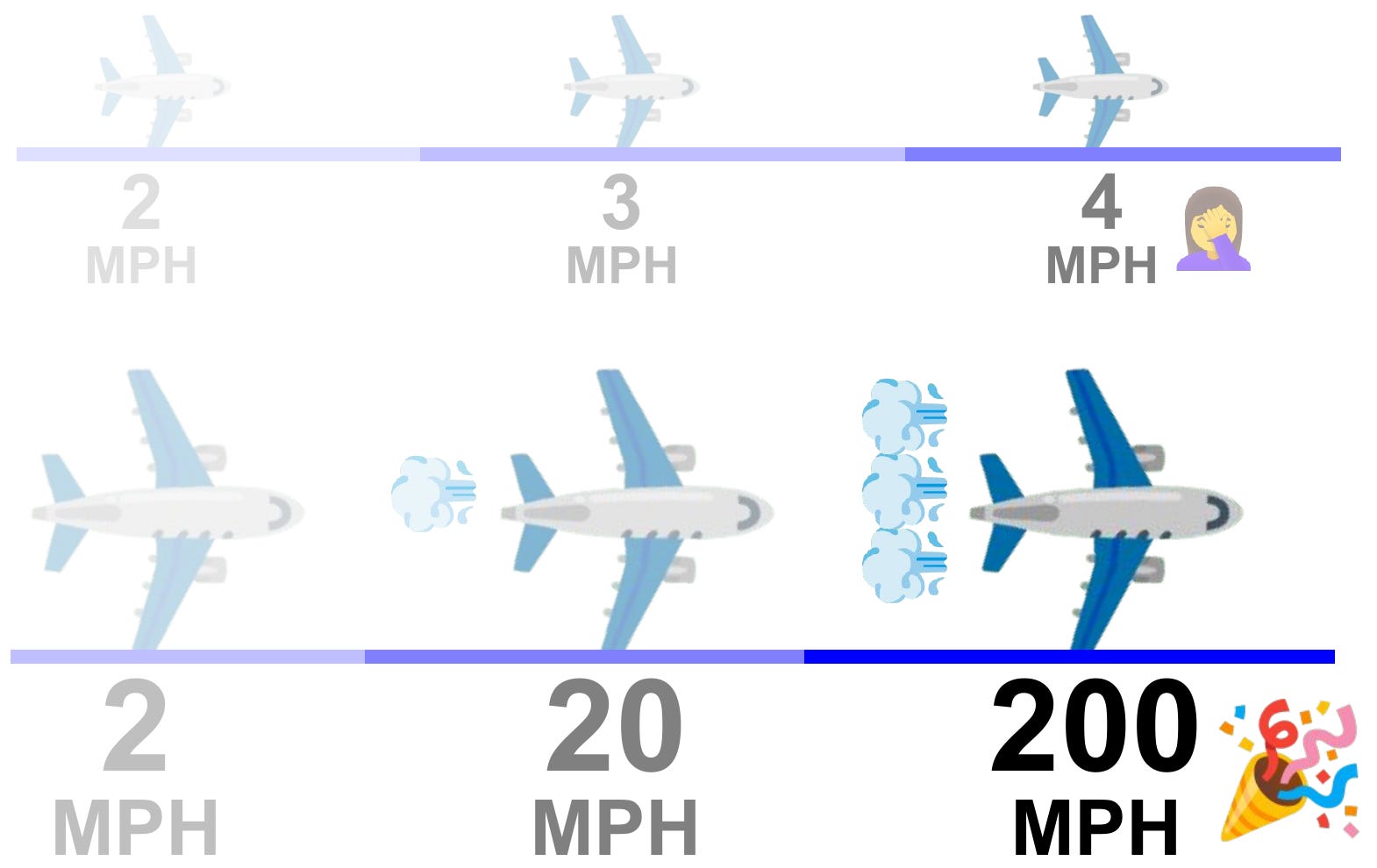
It’s the same with using the Quantified Pain Graph to visualize iterative improvements. The first round of interviews might result in a flat graph, where none of the interviewees have positive dollars of Pain. If after a few rounds of interviews the positive bars start to appear, the startup is starting to hit head-above-water. But if a founder runs round after round of interviews and the graph remains flat, that’s a signal the idea is stalling.

The rate of improvement is the visible signal of a startup’s chances of getting customers.
Mike supports founders of pivoting startups who want to avoid wasting another year on a bad idea. Book a call with me at NascentIdea.com.
For the past 10 years, I’ve been building Nascent as the strategy for quantifying product discovery. As of 2026, I’m publishing Nascent, a few ideas at a time, in regular newsletter posts and podcast episodes. Here’s everything from Episode 035 🎧:
Episode summary: No, don’t count customer discovery interviews.
Deep dive: Let’s kill the count of customer discovery interviews
Deep dive: Cycles of iterative improvement drive decisiveness
This deep dive: What does “good” look like for a startup with no customers?
Head above water before up and to the right, I like that order. But how do you know the pain is real if nobody's paid yet? Is it just what people say in interviews, or is there a harder test?