

👋 Hi, I’m Mike and I’m obsessed with product discovery, measured in dollars. This newsletter is a deep dive into the Yardstick of Pain™, as discussed in Episode 033 of the Nascent podcast (Spotify, Apple, YouTube).
Founders can only get useful data to build their startup from people with “bank accounts” of Pain, meaning people who have first-hand experience with the problem the startup will solve. By contrast, people without experience often mislead founders because they’ll speculate but they don’t have a bank account — they have no currency in the startup’s problem. Once a founder identifies People in Pain with an account, the next question is how much is in it.
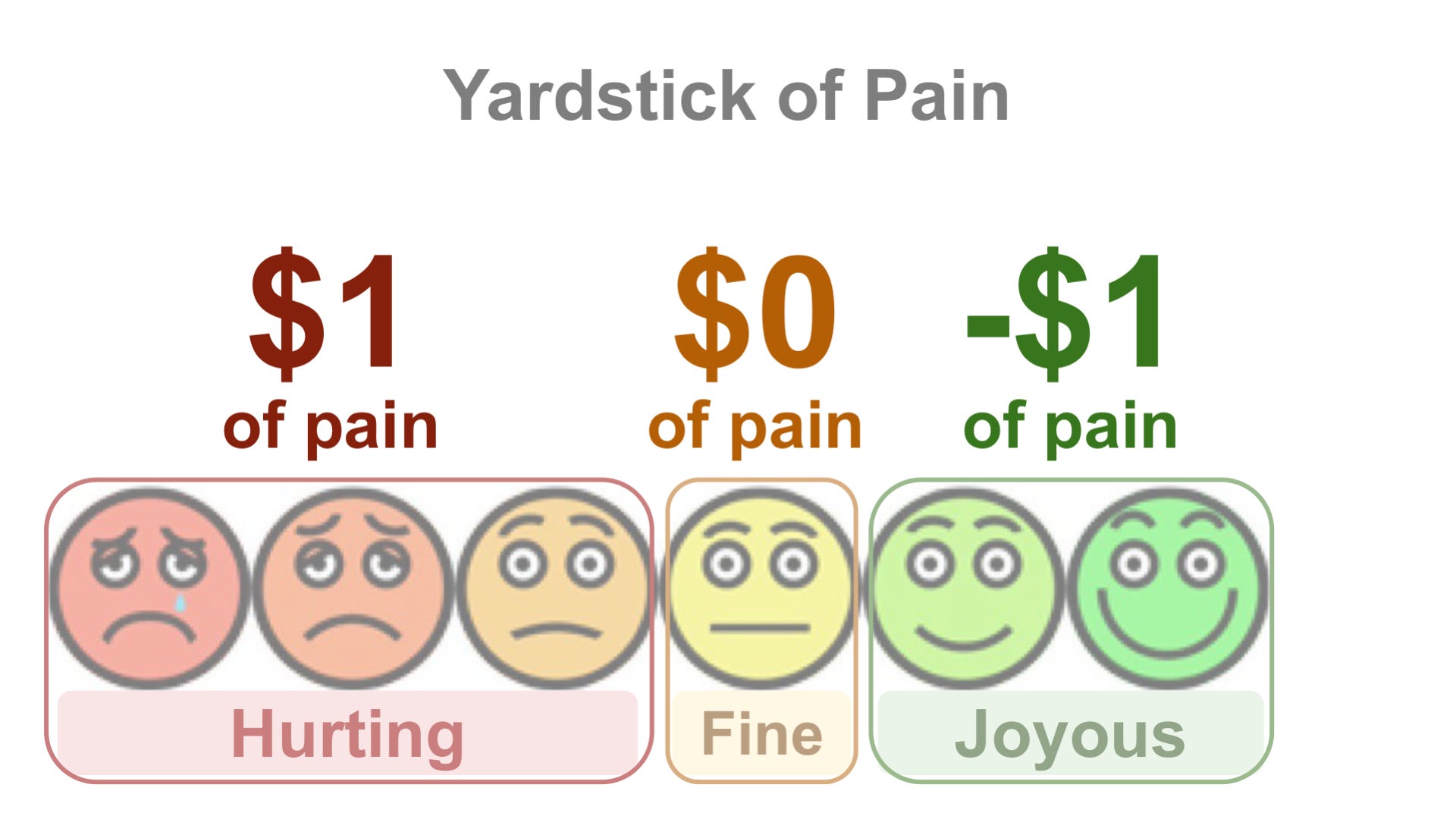
To characterize these bank accounts, Nascent includes another tool called the Yardstick of Pain™, which bins interviewees into one of three categories: hurting, fine or joyous. Someone who is hurting has $1 of Pain, someone who is fine has $0 of Pain, and someone who is joyous has −$1 of Pain. Episode 032 details the mapping between emotions and dollar values.
Essentially, the dollars of Pain in the account reflect the emotional reaction of the person to the problem you want to solve with your startup. A bank account with a “positive balance” means the person has meaningful pain. An empty account reflects that they’ve experienced the problem, but they’re indifferent to it. A negative account reveals that what you consider a problem, they consider a pleasure. These People in Pain with “bank accounts” sit in contrast to Blockers and Distractions who have no bank accounts at all.
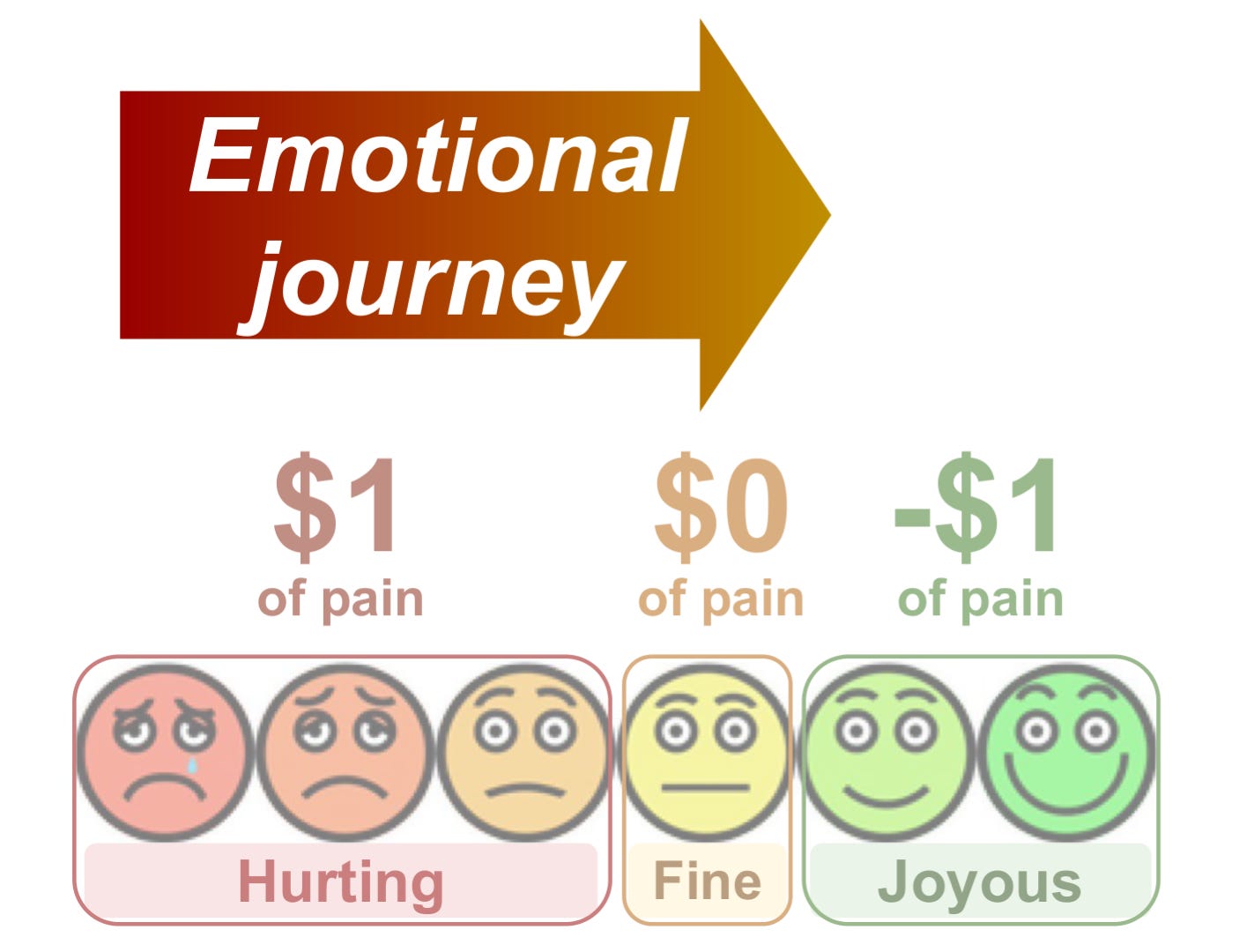
The purpose of a startup is to take People in Pain along an emotional journey from hurting to closer to fine. This is why people with $0 or -$1 of Pain will never become customers. But somebody with $1 of Pain might pay for relief.
We can apply this concept of bank accounts to an actual startup idea. Let’s say there’s a startup called “Homer,” an AI app for homeowners, and Homer solves all the problems that come with owning a house.
Renters and children are Blockers. Someone who lives with their parents but who tells you to build Homer is a Distraction. None of these people have a bank account in the currency of homeownership problems.
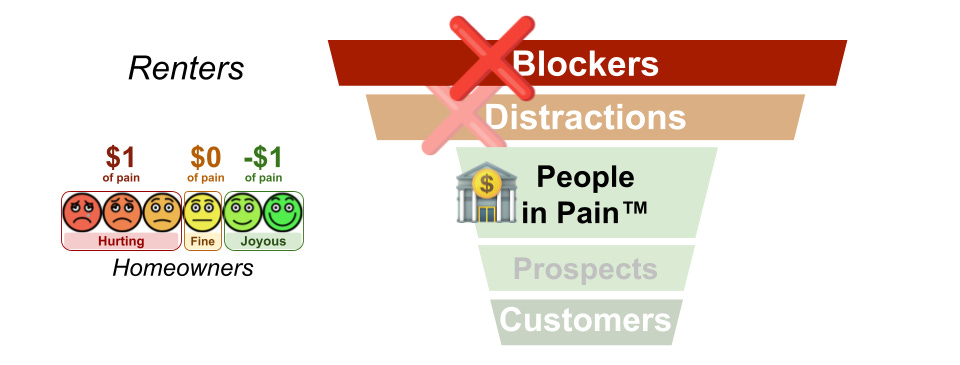
By contrast, homeowners do have that bank account and we can determine its value by running customer-discovery interviews. One interviewee might say that they “struggle” with home maintenance — they have $1 of Pain in their bank account. Another might indicate that she’s “indifferent” about maintaining her home — she has a bank account, but it’s empty: $0. And a third homeowner might surprise us and say that they actually enjoy working on their house. That person has -$1 of Pain. We can think of their bank account as being overdrawn.
As founders work to get a sign of people who might become customers, they need to quickly identify and discard Blockers and Distractions. Instead, founders should focus on People in Pain to understand why they have different amounts of Pain in their bank accounts. When you find somebody with a bank account in the currency of your problem, you’ve found the needle in the haystack.
Mike supports founders of pivoting startups who want to avoid wasting another year on a bad idea. Book a call with me at NascentIdea.com.
For the past 10 years, I’ve been building Nascent as the strategy for quantifying product discovery. As of 2026, I’m publishing Nascent, a few ideas at a time, in regular newsletter posts and podcast episodes. This is the third and last deep dive 📬 from Episode 033 🎧: Yes, talking about “customers” harms most founders. Instead, identify “bank accounts” of Pain. The previous deep dives discussed why every customer begins as a Person in Pain, and how to find People in Pain among the eight billion people in your way.