

👋 Hi, I’m Mike and I’m obsessed with product discovery, measured in dollars. This newsletter is a deep dive into loss aversion, as discussed in Episode 032 of the Nascent podcast (Spotify, Apple, YouTube).
As a founder of a startup with no customers, your most important task is to figure out what it would take for People in Pain™ to decide to pay and become customers. Behavioral economics explains this process, specifically through prospect theory, status quo bias and loss aversion.
Over the past few posts, I’ve mentioned the book Thinking, Fast and Slow by the Nobel laureate Daniel Kahneman because it explains so well how people make decisions under uncertainty.
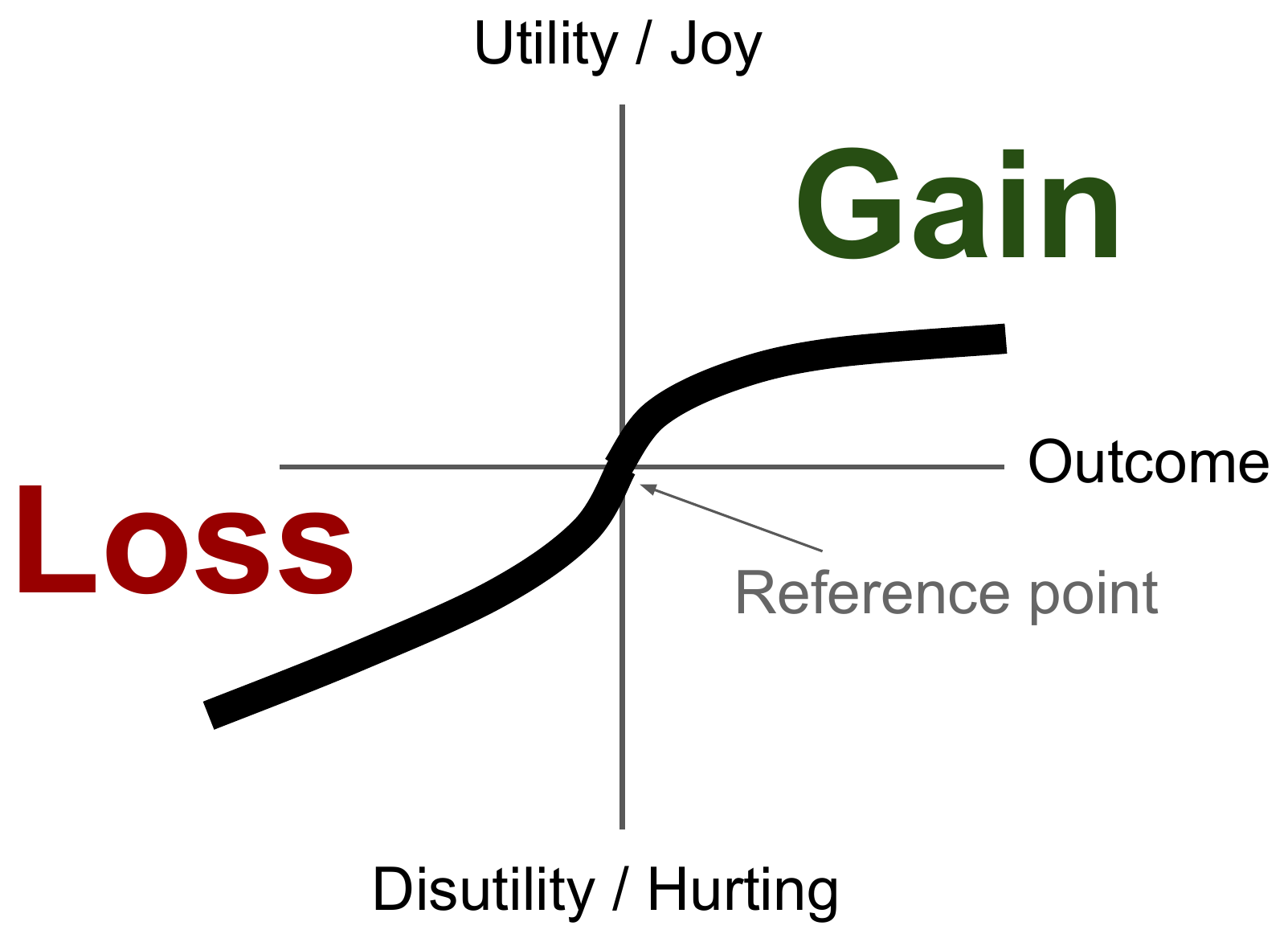
Kahneman’s book includes a section on “prospect theory” that focuses on a “value function graph” that explains why people act differently in response to perceived gains and losses. Most importantly, Kahneman notes that “the response to losses is stronger than the response to corresponding gains.”
Entrepreneurs don’t need to be experts in prospect theory. Here’s what’s important: the value function enables us to predict whether People in Pain might become customers based on how they feel about the problem that our product will solve. Only people in the Loss region of the graph might become customers. For everyone else who is neutral or in the Gain region, the likelihood of them becoming customers is basically zero because loss aversion and status quo bias dominate.
Nascent’s Yardstick of Pain™ maps to the value function and lets founders easily leverage its predictive power. People who are doing fine, or even worse, people who feel joyous will not become customers because they experience status quo bias and loss aversion. They don’t perceive gains from the product to be valuable. Instead, they care more about not losing a good thing so they avoid new products. To quote Kahneman, for these fine and joyous people “the disadvantages of a change loom larger than its advantages, inducing a bias that favors the status quo.”
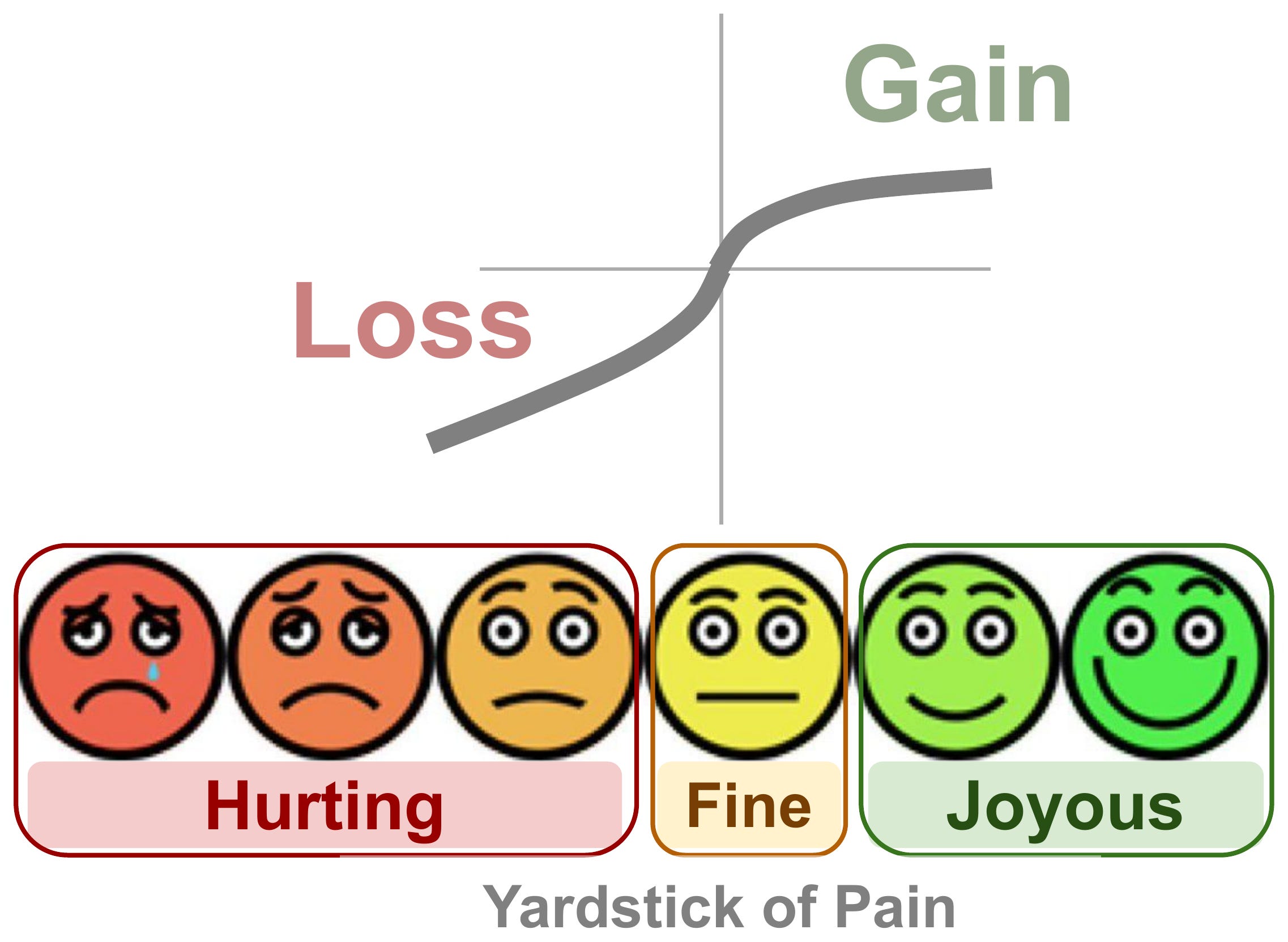
To be clear, yes, there are lots of problems in this world. However, despite all of these problems, most people, most of the time, feel fine. They’re not open to change. This is what “normal” looks like.
As a founder, you want to solve problems for people who are actually open to solutions. These People are hurting, they’re in the Loss region of the value function graph. Only these People might become customers. In an interview, they might say something like “I hate this problem. What do I have to lose? Anything’s better than this!” From the perspective of behavioral economics, only people that have a negative emotional resonance with the problem might be open to taking a gamble on getting Pain relief from your startup’s product.
Here’s how behavioral economics and the Yardstick enable founders to monetize customer discovery interviews:
“Hurting” interviewees have some Pain, which we simplify as $1 of Pain. They might be open to paying for Pain relief.
“Fine” interviewees have no Pain, which is $0. They’re not open to paying for Pain relief because they’re biased to maintain the status quo.
“Joyous” interviewees have negative Pain, which is −$1. As much as your product can take them from feeling “great” to feeling “spectacular”, they’re more worried about losing a good thing. They’re risk averse and keen to avoid a potential loss so much that you’d need to pay them.
Mike supports founders of pivoting startups who want to avoid wasting another year on a bad idea. I offer personalized workshops that train your team to reliably analyze discovery interviews. Book a call with me at NascentIdea.com.
For the past 10 years, I’ve been building Nascent as the strategy for quantifying product discovery. As of 2026, I’m publishing Nascent, a few ideas at a time, in regular newsletter posts and podcast episodes. This is Post 032.1 📬, a deep dive into loss aversion discussed in Ep032 🎧 (18 mins). The deep dives continue in 032.2: what drives a purchase and 032.3: converting interviews into dollars.